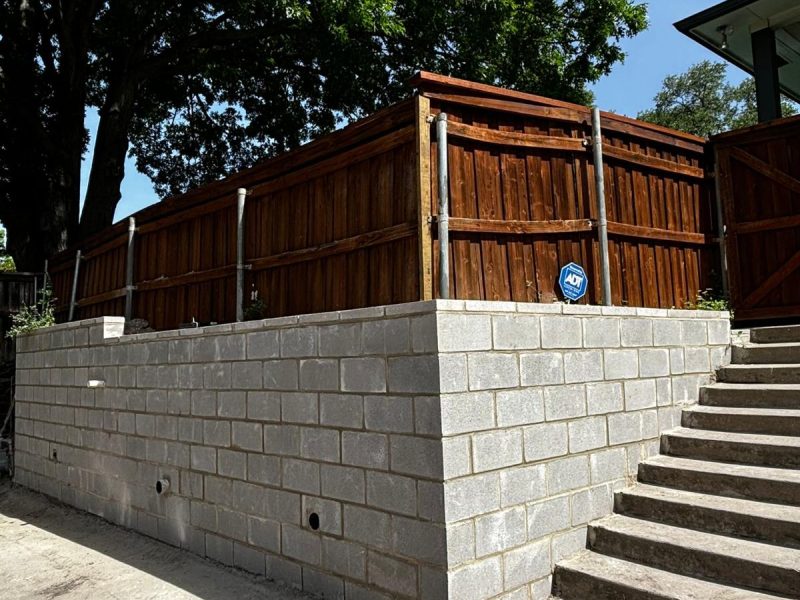
In the 2026 Arlington residential landscape, retaining walls serve as vital engineering structures that manage the significant topographical changes and expansive clay soils of North Texas. A retaining wall is a mechanical system designed to resist the lateral pressure of soil, but when environmental forces exceed the wall’s design capacity, structural failure becomes inevitable. In Arlington, the high plasticity of the local soil means that moisture cycles can cause massive swelling and contraction, placing immense stress on masonry, timber, and concrete barriers. Identifying the early indicators of structural distress is essential for preventing a catastrophic collapse that could threaten your home’s foundation or landscape. This guide details the technical warning signs that necessitate retaining wall repair in Arlington, providing homeowners with the diagnostic insights needed to protect their property investment. At Modern Build Solutions, we utilize advanced engineering protocols to stabilize failing structures and restore their load-bearing integrity.
Structural Leaning and the Physics of Lateral Soil Pressure
The most visible indicator of a failing retaining wall is a noticeable lean or tilt away from the soil it is designed to hold. Technically, this is often caused by hydrostatic pressure, which occurs when water accumulates behind the wall and increases the weight of the soil beyond the wall’s tipping point. In Arlington’s clay-heavy environment, the soil acts like a sponge, expanding as it saturates and pushing against the back of the structure. If the wall was not engineered with a sufficient “batter” (a slight backward lean) or a deep enough footer, the lateral force will eventually cause the wall to rotate. Once a wall begins to lean, its center of gravity shifts, making a total collapse a matter of time rather than a possibility.
- Rotational Failure Analysis: We measure the degree of tilt to determine if the wall has exceeded its critical angle of stability.
- Hydrostatic Load Calculation: Our engineers assess the saturation levels of the backfill to identify the source of the excessive hydraulic force.
- Foundation Depth Verification: We inspect the base of the wall to ensure it is embedded below the frost line and the active soil layer to prevent shifting.
Pro-Tip: If you notice a gap forming between the back of the wall and the soil it is supporting, the wall is technically in the early stages of rotational failure. Do not simply fill this gap with more dirt, as this increases the weight and accelerates the lean. Seeking a professional evaluation for retaining wall installation in Arlington or repair can help you determine if the wall requires structural tie-backs or improved drainage to stabilize the load.
Cracking and Material Fatigue in Masonry and Concrete
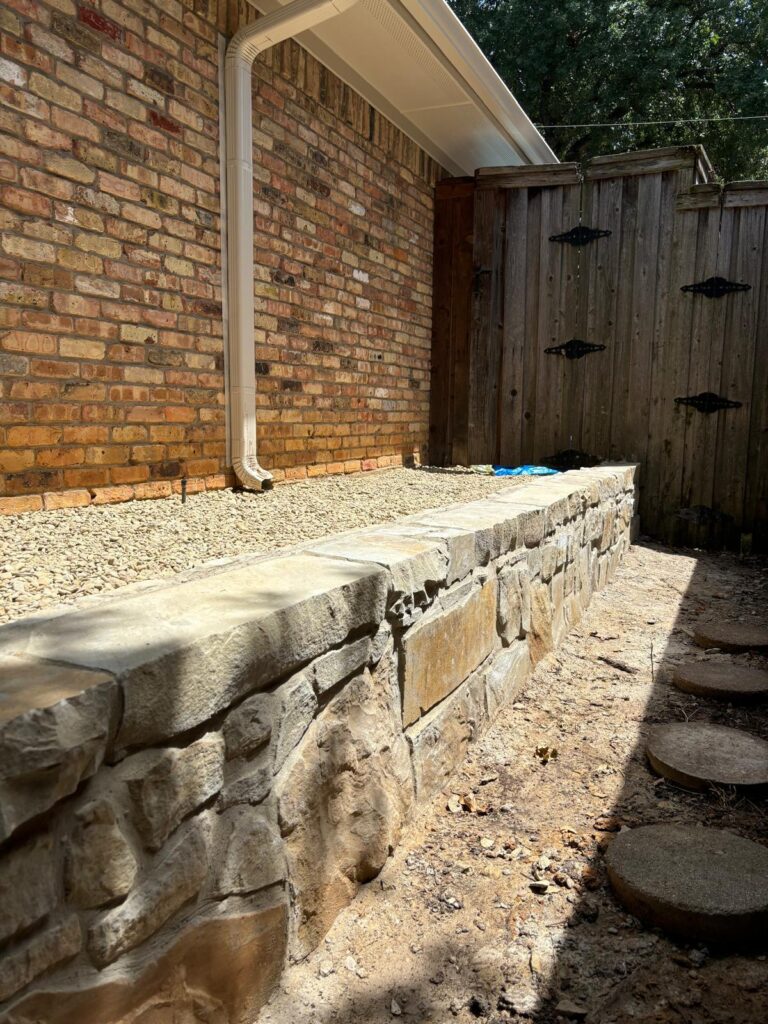
While minor hairline cracks can be common in older structures, large horizontal or stair-step cracks are technical indicators of severe structural stress. Horizontal cracks often suggest that the wall is bowing in the middle under the weight of the earth, while stair-step cracks in brick or stone indicate that the foundation is settling unevenly. In the 2026 Arlington climate, these cracks are particularly dangerous because they allow water to penetrate the core of the wall. During freeze-thaw cycles, this moisture expands, widening the cracks and causing the concrete or mortar to spall and crumble. If you can fit a coin into a crack, the wall’s internal reinforcement, such as rebar or geogrid, may already be compromised by oxidation.
- Fissure Mapping: We document the direction and depth of all cracks to identify whether the failure is caused by mid-wall bowing or base-level settlement.
- Spalling Assessment: Our technicians check for the loss of surface material, which indicates that the internal chemistry of the concrete is breaking down.
- Reinforcement Integrity Testing: We look for rust staining coming from cracks, which is a technical sign that the internal steel rebar is corroding and losing its tensile strength.
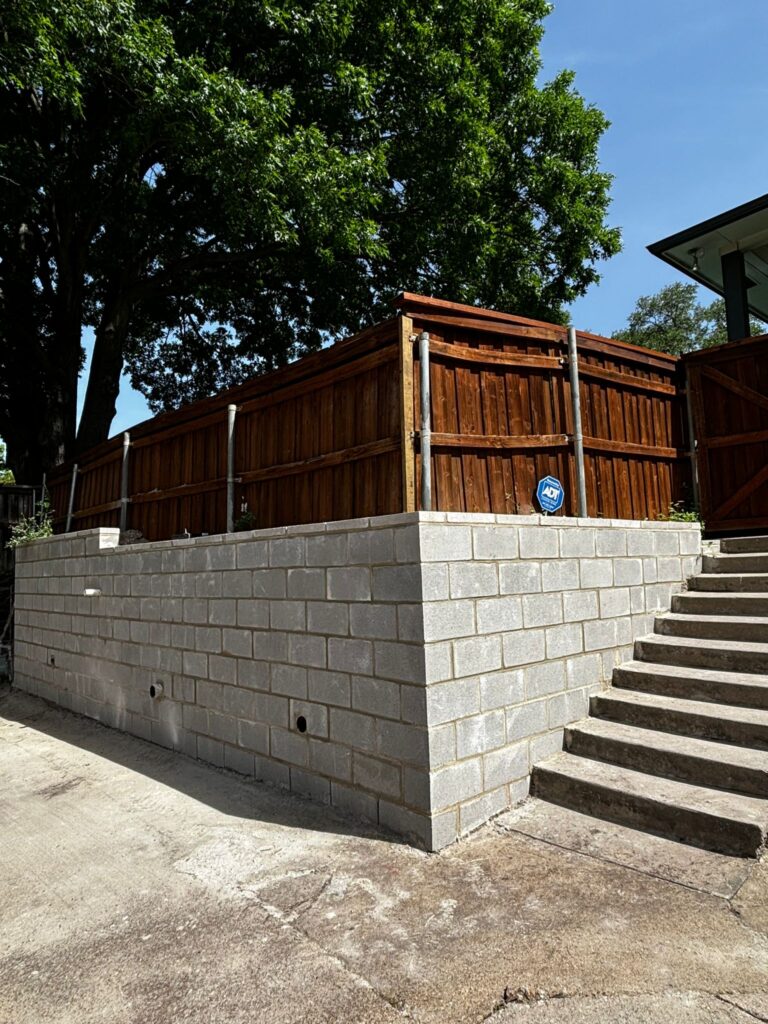
Pro-Tip Pay close attention to “weep holes,” which are the small openings at the base of the wall designed to let water escape. If these holes are dry even after a heavy North Texas rain, they are technically blocked. This blockage leads to the internal pressure that causes the cracks you see on the surface. For a comprehensive system audit, visit our services page to learn about our drainage restoration protocols.
Separation at the Joints and Wing Walls
A retaining wall is often part of a larger system that includes corners, wing walls, and stairs. When these components begin to pull away from each other, it is a sign that different sections of the wall are moving at different rates. Technically, this separation indicates that the “deadman” anchors the horizontal beams buried back into the hill to pull the wall back, have failed, or were never installed. In Arlington, soil movement can cause these anchors to slip, leading to the gradual detachment of the wall segments. This separation breaks the continuous structural line of the wall, significantly reducing its ability to resist the soil load and creating a point of ingress for further water damage.
Bulging and the Failure of Internal Drainage Systems
A pregnant or bulging wall is a critical warning sign that the internal drainage system has failed. Retaining walls must be built with a layer of gravel backfill and a perforated pipe at the base to divert water away from the structure. When these become clogged with silt and clay, the water becomes trapped, creating a heavy, liquid mass that pushes against the center of the wall. This causes the wall to bulge outward, which is technically known as a deflection failure. At Modern Build Solutions, our retaining wall repair in Arlington often involves excavating the area behind the bulge to install high-performance drainage composites and clean gravel, relieving the pressure and saving the structure.
- Silt Accumulation Analysis: We check the output of the drainage pipes for sediment, which indicates that the filter fabric behind the wall has been breached.
- Deflection Measurement: Our team uses laser levels to quantify the amount of outward bulge to ensure the wall is still within its elastic limit.
- Hydraulic Pressure Relief: We may install additional high-output weep holes to quickly lower the water table behind the wall during emergency repair situations.
Pro-Tip: If you see water seeping directly through the face of a stone or concrete wall rather than out of the designated drains, the internal hydrostatic pressure has reached a dangerous level. This is a technical emergency that requires immediate intervention to prevent a blowout. You can find more information about our emergency response on our contact page.
Soil Erosion and Sinkholes at the Top of the Wall
The appearance of sinkholes or localized soil erosion at the top edge of the retaining wall is a sign of piping. This occurs when water finds a path behind the wall and begins to wash away the fine soil particles through cracks or joints. Technically, this creates a hollow void behind the wall, which removes the necessary friction and weight that helps keep the wall in place. These voids can eventually lead to the collapse of the ground above, endangering patios, walkways, or even your home’s foundation. Identifying these voids early allows for a technical grouting or backfilling process that restores the soil’s density and prevents the wall from losing its structural support.
Conclusion
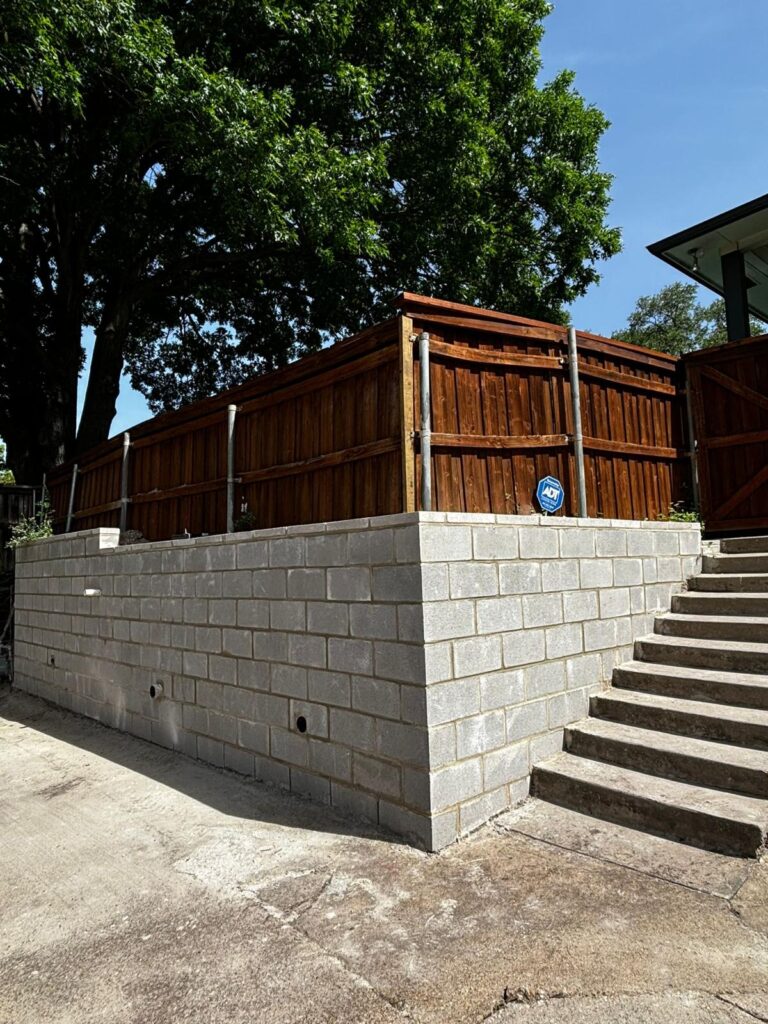
Ignoring the warning signs of retaining wall failure in Arlington can lead to expensive property damage and significant safety hazards. Whether it is a subtle lean or a prominent bulge or a growing crack, these indicators are the technical language of a structure under extreme stress. In 2026, the unique soil and weather conditions of North Texas demand a proactive and engineered approach to wall maintenance. At Modern Build Solutions, we are dedicated to providing the technical expertise and high-quality materials needed to diagnose and repair your structural barriers. By addressing these issues today, you are ensuring the long-term stability of your landscape and the safety of your home. Do not wait for a total collapse; invest in a professional structural audit to protect your Arlington property for decades to come.
Transforming your home’s exterior stability begins with professional expertise. To learn more about the latest building standards and structural innovations in North Texas, you can explore our comprehensive articles and project guides for local inspiration. If your residence is ready for a professional and highly technical structural assessment, securing expert consultation and a professional project estimate is the most effective way to ensure a high-performance experience. You can view our history of professional service and client satisfaction to see how we have served homes across the Arlington region for years. At Modern Build Solutions, we offer tailored residential structural solutions and are recognized as a leading provider of retaining wall installation in Arlington designed to meet the unique mechanical needs of Texas properties.
FAQ
How much does retaining wall repair cost in Arlington?
Minor repairs such as drainage restoration or crack sealing may cost $1,500 to $3,000, while major structural stabilization can range from $5,000 to $15,000, depending on the size of the wall.
Can a leaning retaining wall be saved?
Yes. Technically, we can use soil anchors or tie-backs to pull a leaning wall back into position, provided the structural integrity of the material is still sound.
Why is my retaining wall bulging?
Bulging is technically caused by excessive hydrostatic pressure from water trapped in the soil behind the wall, usually due to a clogged or missing drainage system.
Is it normal for retaining walls to have small cracks?
Hairline cracks are common due to thermal expansion, but horizontal or widening cracks are technical indicators of structural failure and require immediate retaining wall repair in Arlington.
How long should a retaining wall last in Arlington?
A professionally engineered concrete or masonry wall should technically last 40 to 50 years, whereas timber walls typically have a lifespan of 10 to 15 years in the Texas climate.
What is a weep hole?
A weep hole is a technical drainage opening through a wall that allows water to escape from the backfill, reducing the hydraulic pressure on the structure.
Does your company provide free inspections?
We offer professional project estimates and technical consultations for homeowners in the Arlington, TX area.
Can I repair my retaining wall myself?
Small aesthetic repairs are possible, but structural issues like leaning or bulging require technical engineering to ensure the wall does not collapse during the repair process.
What is a deadman anchor?
A deadman is a technical structural member buried behind the wall and attached to the face with a rod, providing the necessary resistance to keep the wall from tipping forward.
Will insurance cover a retaining wall collapse?
Standard policies usually exclude soil movement or poor maintenance, but coverage may apply if the collapse was caused by a sudden, catastrophic event like a burst pipe.