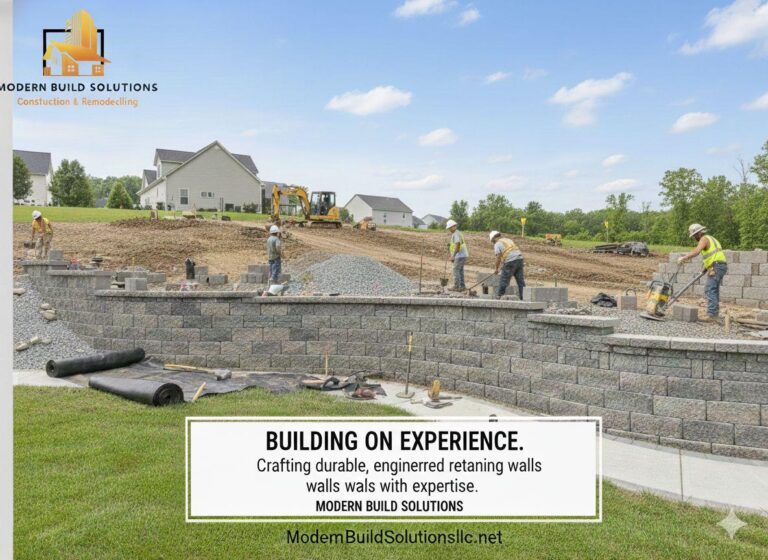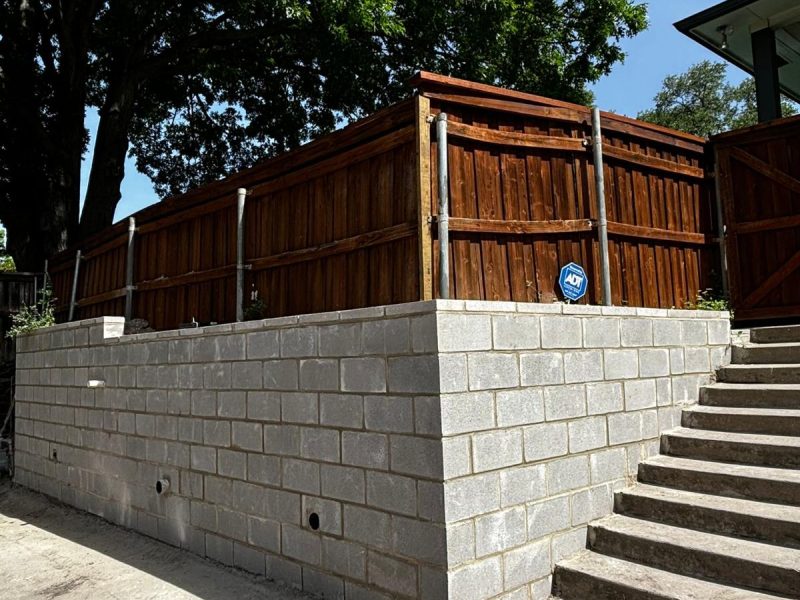
Arlington, Texas, is notorious for its expansive clay soil, which places immense pressure on any outdoor structure. Retaining walls are often a necessity in the North Texas landscape to manage sloping lots and prevent soil erosion. However,r building a wall that stands the test of time and meets the rigorous 2026 Arlington building codes requires more than just stacking blocks. The city has specific requirements for height and setbacks, and most importantly, drainage management. In 2026, the municipal inspection process has become increasingly focused on how water is redirected to the storm drain system. Failing to account for hydrostatic pressure is the primary reason retaining walls fail and why they fail inspection. At Modern Build Solutions, we specialize in navigating these complex local ordinances to ensure your landscape project is safe, legal, and durable. This guide breaks down the essential technical steps for a successful wall build.
Understanding Arlington Permit Thresholds
In Arlington, any retaining wall that exceeds four feet in height measured from the bottom of the footing to the top of the wall requires a building permit. This is a critical threshold because walls over four feet also require engineered plans signed by a Texas-licensed professional engineer. Even for walls under four feet, you may still need a permit if the wall is supporting a surcharge. A surcharge is any additional weight behind or above the wall, such as a driveway, a fence, or even a neighboring structure. In 2026, the city also look closely at visibility triangles on corner lots to ensure walls do not obstruct the view of drivers. Understanding these triggers before you break ground prevents costly work stoppages and fines. We handle the entire permitting process, ensuring that the structural design accounts for the specific loads and soil conditions of your property.
- Height Limits: Walls over four feet require an engineer stamp and a formal building permit from the City of Arlington.
- Surcharge Awareness: Any wall supporting a load like a vehicle or building requires professional structural design regardless of height.
- Visibility Zones: Modern 2026 codes restrict wall height near street intersections to maintain safe sight lines for traffic.
Managing Hydrostatic Pressure with Aggregates
The biggest enemy of a retaining wall is not the soil itself but the water trapped inside it. When the heavy clay soil in Arlington becomes saturated, it expands and creates massive hydrostatic pressure. To pass a 2026 inspection, you must demonstrate a clear plan for drainage aggregate. We use a minimum of twelve inches of clean crushed stone directly behind the wall. This layer acts as a vertical chimney that allows water to fall quickly to the base instead of pushing against the blocks. We avoid using pea gravel or sand because these materials can migrate and eventually clog the system. The use of angular crushed stone ensures maximum porosity and structural stability. By creating this dedicated path for water, you significantly reduce the weight load on the wall and ensure it remains plumb for decades. This is a non-negotiable step for any high-performance build.
The Role of Geotextile Filter Fabrics
A common mistake that leads to inspection failure is the omission of geotextile fabric. In 2026, Arlington inspectors often look for a soil separation barrier between the drainage gravel and the native clay. Without this fabric, the fine particles of clay will wash into the gravel over time and clog the drainage path. We utilize non-woven geotextile fabric to wrap the entire drainage column. This allows water to pass through freely while keeping the soil in its place. This is often referred to as a burrito wrap technique. It preserves the integrity of the crushed stone and ensures the French drain at the base stays clear of silt. Using high-quality fabric is a low-cost way to provide long-term insurance for your retaining wall. It prevents the unsightly leaching of soil through the wall face and keeps the internal drainage system functioning as designed.
Installing Perforated Drain Pipes Correctly
Every retaining wall needs a highway for water to exit, and that highway is the perforated drain pipe. In 2026, we install four inch perforated pipes at the lowest point behind the wall. The pipe must be positioned with the holes facing down to allow water to rise into the pipe and be carried away. We maintain a slight downward slope of at least one-eighth inch per foot to ensure gravity does the work. The pipe must then be connected to a solid outlet such as a pop-up emitter or tied directly into a city-approved drainage structure. If the water has nowhere to g,o it will simply pool behind the wall and cause structural damage. Proper discharge is a key focus for Arlington inspectors who want to ensure your wall does not dump excess water onto a neighbor’s property.
- Hole Orientation: Perforated pipes must be placed with holes facing down to effectively collect water from the bottom up.
- Slope Minimums: A consistent downward grade is required to prevent stagnant water and ensure efficient drainage flow.
- Discharge Points: Water must be directed to a safe runoff area or a storm drain to meet 2026 municipal requirements.
Weep Holes and Secondary Drainage
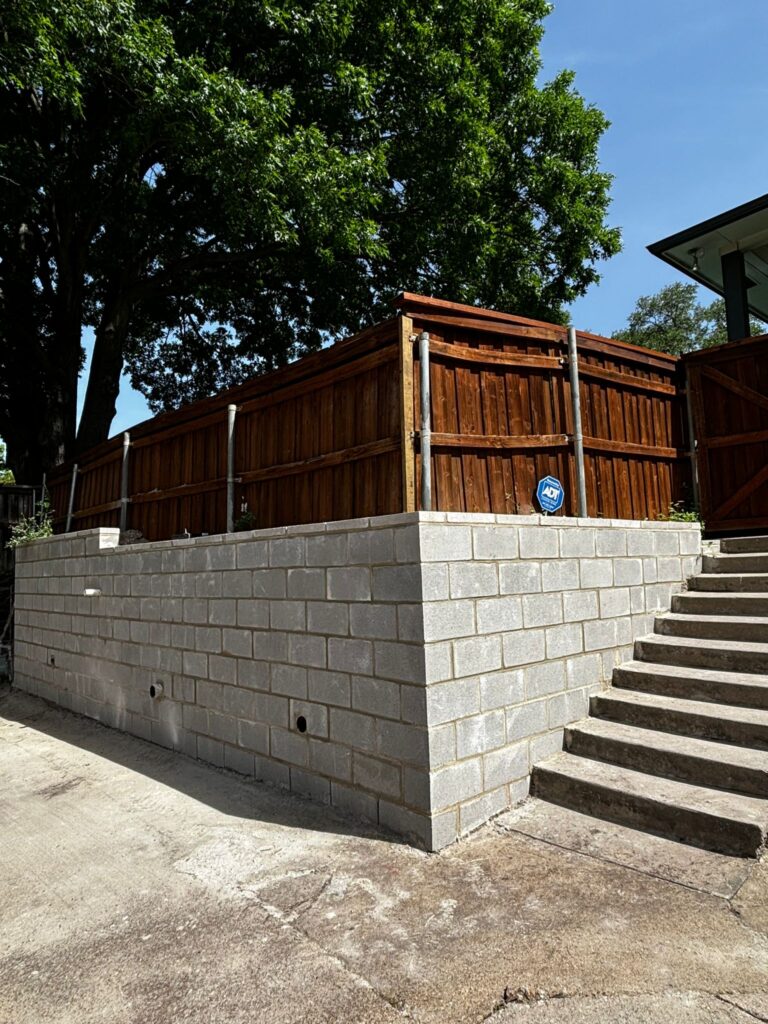
For solid masonry or poured concrete walls, weep holes are a mandatory secondary drainage feature. These small openings at the base of the wall allow any water that makes it through the aggregate to escape. In 2026, we spaced weep holes every four feet to provide ample relief for hydrostatic pressure. We often use small covers or screens to prevent pests from entering the holes while still allowing water to flow. While the primary French drain handles the bulk of the runoff, weep holes act as a critical backup system during the heavy North Texas downpours. An inspector will check for these openings to ensure the wall has multiple ways to shed water. Including weep holes is a hallmark of a professionally built wall and is essential for the longevity of the mortar and the structural units themselves.
Soil Compaction and Base Preparation
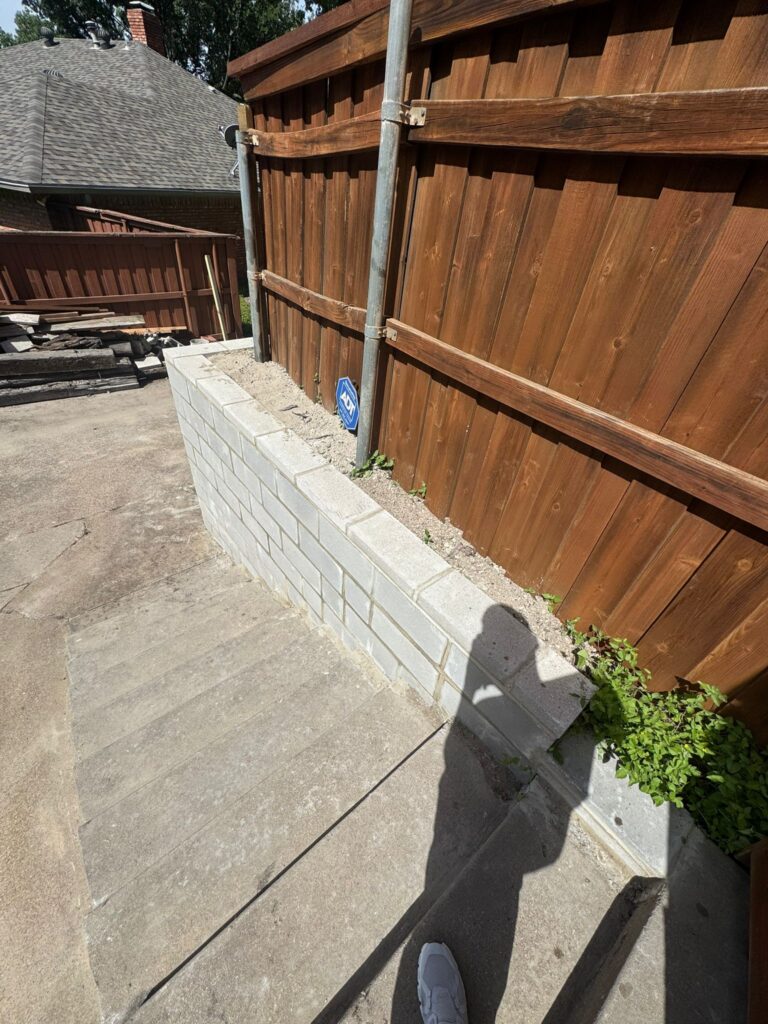
The foundation of a retaining wall is where the most critical work happens. Arlington inspectors require a compacted base that can support the weight of the wall without settling. We dig a trench that is at least twelve inches wider than the wall units and fill it with a six-inch layer of compacted road base. In 2026, we use mechanical plate compactors to ensure the base reaches the necessary density. The first course of block is then buried to provide lateral stability and prevent the wall from sliding forward. We often bury one full block for every eight inches of wall height. This deep-set foundation is what allows the wall to resist the shifting nature of North Texas clay. Skipping the compaction step is the fastest way to a leaning wall and a failed inspection. We prioritize a level and stable base to ensure the rest of the build goes perfectly.
Conclusion
Building a retaining wall in Arlington is a complex task that requires a deep understanding of 2026 drainage codes and structural physics. By focusing on the hidden details like crushed stone aggregates and geotextile fabrics, and perforated pipes, you can ensure your wall passes inspection and protects your property. The expansive clay soil of North Texas is unforgiving, but a well-engineered drainage system provides the necessary relief to keep your landscape stable. At Modern Build Solutions, we believe that the beauty of a wall is secondary to its performance. Whether you are terracing a backyard or protecting a foundation, our technical approach ensures that every wall we build is a permanent solution. Investing in professional design and high-quality materials is the best way to avoid the stress of a failing structure and ensure your Arlington home remains a safe and beautiful sanctuary.
Transforming your home is a journey that begins with a clear vision and professional expertise. To learn more about the latest construction standards and design innovations in the North Texas area, you can explore our comprehensive remodeling blog and design guides for local inspiration. If your current bathroom is suffering from outdated plumbing or you are ready to start a high-end zero-entry transformation, securing expert consultation and accurate project estimation is the most effective way to ensure a seamless experience. You can view our history of craftsmanship and client success to see how we have revitalized homes across Arlington. At Modern Build Solutions, we offer tailored renovation and master suite services designed to meet the unique structural needs of mid-century properties. We are dedicated to helping you create a space that balances modern luxury with the classic character of your Arlington residence.
FAQ
When do I need a permit for a retaining wall in Arlington?
You need a permit for any wall over four feet tall or any wall that supports a surcharge like a driveway.
Why did my retaining wall fail inspection?
The most common reasons for failure are inadequate drainage plans or missing weep holes and lack of a professional engineer’s stamp.
What is the best backfill for a retaining wall?
Clean crushed stone is the best choice because it allows for high water flow and does not clog like soil.
Do I need an engineer for a small garden wall?
Generally, no, if the wall is under four feet and not supporting a load but it is still wise to follow code.
How do I stop water from pooling behind my wall?
Installing a perforated drain pipe and using a vertical column of gravel is the most effective way to stop pooling.
Can I build a retaining wall on the property line?
Yes, but you must ensure the wall and its drainage system do not interfere with neighboring properties or public easements.
What is a surcharge in retaining wall design?
A surcharge is any extra weight applied to the soil behind the wall, such as a shed or a pool.
How long does a retaining wall permit take in Arlington?
In 2026, the permit process usually takes two to three weeks once the engineered plans are submitted to the city.
Is wood a good material for a retaining wall?
Wood can work for small garden borders, but it eventually rots in the humid Texas climate and is not recommended for high walls.
How deep should the foundation of a wall be?
A good rule is to bury at least one eighth of the wall height plus another six inches for the base material.