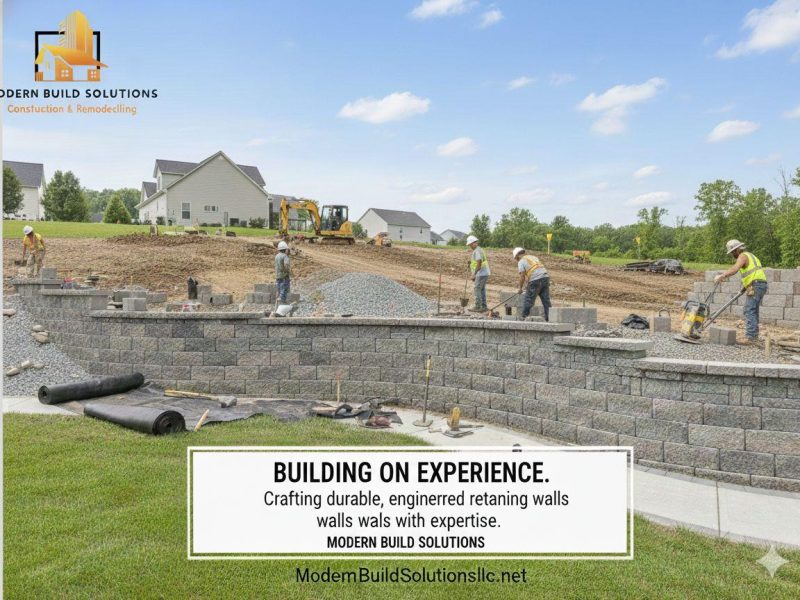
In the 2026 Arlington residential sector, soil erosion is a significant geological challenge that threatens the structural stability of foundations, landscapes, and subterranean utilities. Because the North Texas region is characterized by high-plasticity clay and intense seasonal precipitation, the migration of topsoil can occur rapidly, leading to the destabilization of building envelopes. A retaining wall is a mechanical solution designed to arrest this movement by physically containing the earth and managing the hydraulic forces that drive erosion. However, simply stacking blocks is insufficient; a wall must be engineered to withstand the specific geophysics of the Arlington area to be effective. At Modern Build Solutions, we view erosion control as an integrated engineering discipline that combines structural retention with advanced water management. This guide provides a technical analysis of how expertly engineered structural barriers prevent erosion and preserve the long-term integrity of your Arlington property.
Stabilizing the Angle of Repose and Preventing Slope Failure
Every soil type has a natural angle of repose, which is the steepest angle at which the material can remain stable without sliding. Technically, when a slope in an Arlington yard exceeds this angle, often due to grading for a pool or a patio, the soil becomes inherently unstable. A properly installed retaining wall acts as a mechanical restraint that allows for a vertical or near-vertical change in grade, effectively holding the soil in a state of compression. In 2026, we utilize global stability analysis to ensure the wall is seated deep enough into the subgrade to prevent a deep-seated rotational failure, where the entire slope slides underneath the foundation of the wall itself.
- Mass-Gravity Equilibrium: We calculate the necessary weight of the wall units to ensure they provide enough downward force to resist the lateral Active pressure of the soil.
- Shear Strength Enhancement: By installing a compacted base of angular aggregate, we increase the friction at the base of the wall, preventing the structure from sliding forward under the weight of the slope.
- Toe-Slope Stabilization: We technically reinforce the toe or the bottom of the wall with rip-rap or specific plantings to ensure that runoff does not undercut the wall’s foundation.
Pro-Tip: If you have a slope that exceeds a 3:1 ratio (three feet of horizontal distance for every one foot of vertical rise), the soil is technically at a high risk for erosion during Texas thunderstorms. Installing a professional grade earth retention system is the only way to permanently stabilize the grade and prevent your yard from washing into your neighbor’s property. For a site-specific slope analysis, visit our Arlington, TX regional portal.
Hydraulic Energy Dissipation and Runoff Management
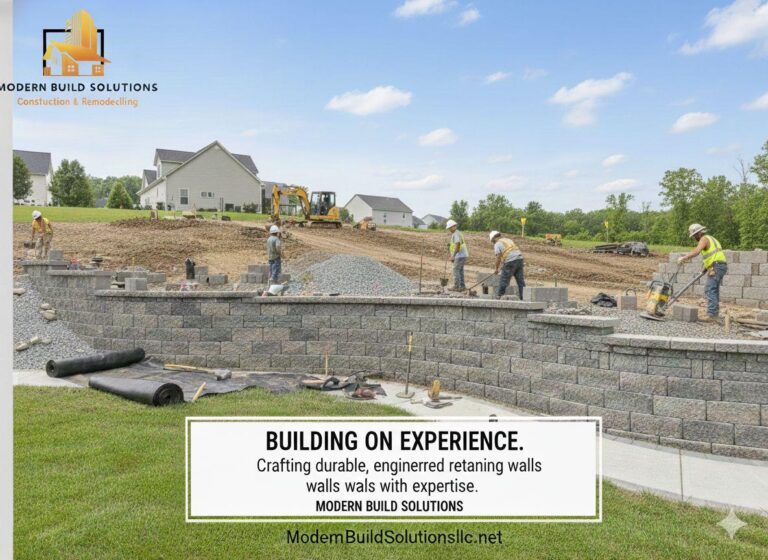
Erosion is primarily driven by the kinetic energy of water moving across the surface of the soil. When rain falls on a sloped Arlington landscape, it gains velocity, stripping away the topsoil and creating deep rills or gullies. A retaining wall prevents this by breaking the slope into smaller, manageable terraces. Technically, this reduces the flow path of the water, preventing it from reaching the terminal velocity required to displace soil particles. At Modern Build Solutions, we integrate surface drainage features, such as swales and catch basins, to capture and slow down runoff before it ever reaches the face of the wall.
- Velocity Attenuation: By terracing a steep hill, we technically convert a high-energy runoff environment into a series of low-energy zones where water can be safely diverted.
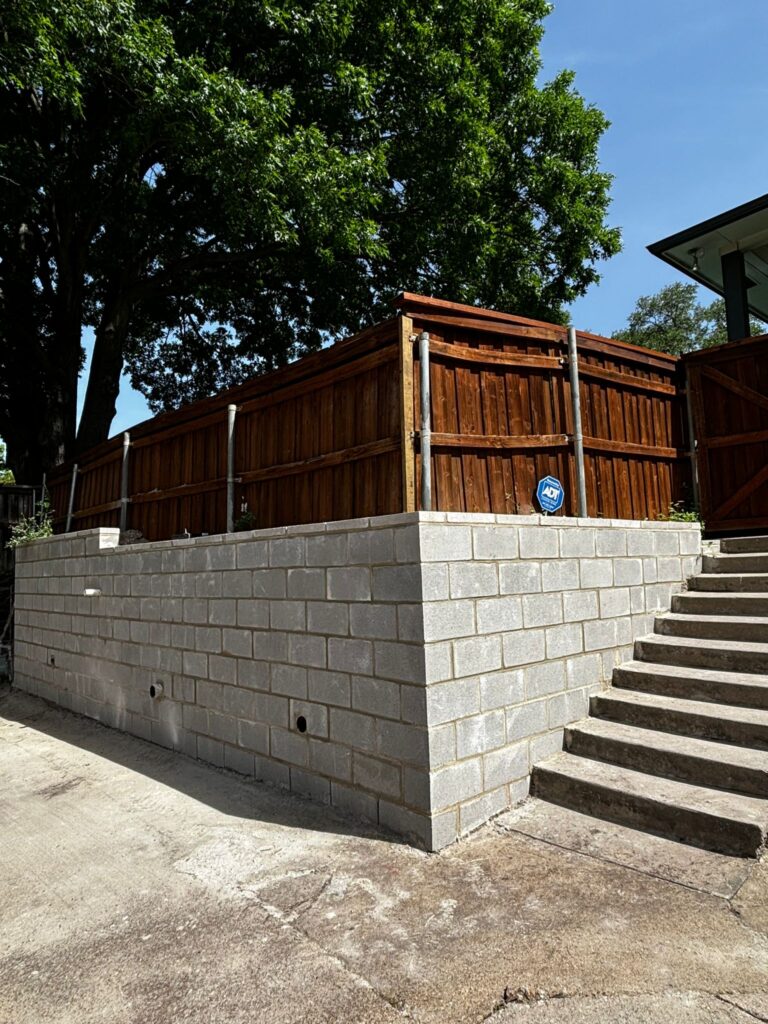
- Permeable Backfill Engineering: We use clean 57-stone as backfill to allow water to filter vertically into the drainage system rather than sheeting over the top of the wall.
- Scour Protection: At the discharge points of the wall’s weep holes, we install splash blocks or gravel pads to dissipate the energy of the exiting water and prevent localized soil scouring.
Pro-Tip: A common technical mistake in DIY walls is the lack of a chimney drain. This is a vertical layer of gravel placed directly behind the wall. Technically, this chimney captures water and directs it to the base pipe before it can saturate the soil and cause a slump failure. You can see examples of our drainage engineering on our comprehensive services page.
Protecting the Building Envelope and Foundation Integrity
In Arlington, erosion is not just an aesthetic issue; it is a threat to the home’s building envelope. If soil is allowed to wash away from the perimeter of a house, the foundation can become exposed, leading to a loss of skin friction and structural settlement. Furthermore, eroded soil can clog area drains and lead to water pooling against the foundation, which triggers the expansive clay to swell and apply pressure to the basement or crawlspace walls. A stabilized and repaired retaining wall ensures that the soil levels around the foundation remain constant, maintaining the engineered moisture balance required for slab-on-grade homes in North Texas.
- Slab Edge Protection: We ensure that the final grade established by the wall keeps at least 4 to 6 inches of the foundation beam exposed to prevent pest ingress while keeping the footer covered.
- Subsurface Moisture Stabilization: By managing runoff, the wall prevents the dry-out cycles that cause clay soil to shrink away from the foundation.
- Utility Line Safeguarding: We map out subterranean gas and water lines before installation to ensure the wall provides a protective barrier against soil movement that could snap these pipes.
Pro-Tip: Check the corners of your home for voids or gaps in the dirt. This is a technical sign that soil is migrating away from your foundation. A small, strategically placed retaining wall can technically pin that soil in place, preventing the need for an expensive $20,000 foundation piering job later. Read more about foundation protection on our technical construction blog.
Vegetative Reinforcement and the Role of Geotextiles
Modern erosion control often utilizes a hybrid approach known as bio-engineering. While the retaining wall provides the primary mechanical force, we use geotextile fabrics and specific plantings to provide secondary reinforcement. In 2026, we utilize non-woven needle-punched fabrics that allow water to pass through while keeping soil particles in place. Technically, this prevents piping where water creates a tunnel behind the wall and washes away the internal soil mass. Once the wall is in place, the terraces can be planted with deep-rooted Texas-native species that further knit the soil together, creating a permanent, self-healing erosion barrier.
Conclusion
Proper retaining wall installation is a vital technical defense against the destructive forces of soil erosion in Arlington. By understanding the mechanics of slope stability, hydraulic energy, and foundation protection, homeowners can invest in solutions that offer both aesthetic beauty and structural security. In 2026, the volatile North Texas climate makes professional engineering a necessity rather than a luxury. At Modern Build Solutions, we are dedicated to providing the technical expertise and high-performance craftsmanship needed to anchor your landscape and protect your home. Do not allow the Texas rain to wash away your property’s value; choose an engineered retaining wall to ensure your home stands on solid ground for decades to come.
Transforming your home’s exterior stability begins with professional expertise. To stay updated on the latest building standards and erosion control innovations in North Texas, you can access our library of technical construction insights for local inspiration. If your residence is ready for a professional and highly technical structural assessment, securing expert consultation and a formal project estimate is the most effective way to ensure a high-performance experience. You can review our history of excellence and client testimonials to see how we have served homes across the Arlington region for years. At Modern Build Solutions, we offer specialized structural renovation packages and are recognized as a leading provider of retaining wall installation in Arlington designed to meet the unique mechanical needs of Texas properties.
FAQ
How does a retaining wall stop soil from washing away?
Technically, it breaks the slope into flat sections to reduce water velocity and provides a physical barrier that holds the soil mass in place against gravity.
What is the best material for erosion control in Arlington?
Segmental concrete blocks are technically superior because they are heavy, allow for drainage through the joints, and can handle the expansion of clay soils better than timber.
Do I need a retaining wall if my yard is flat?
Not usually for erosion, but you may need one if a neighbor’s yard is higher than yours, as their runoff could technically wash away your topsoil.
How much does erosion control installation cost?
A project that includes a retaining wall and drainage usually costs between $3,000 and $10,000, depending on the length of the wall and the amount of grading required.
Can plants replace a retaining wall for erosion?
Only on very shallow slopes. Technically, for any slope steeper than a 3:1 ratio, the root system of plants is not enough to prevent a deep-seated landslide.
Does your company fix eroded areas behind walls?
Yes. We specialize in retaining wall repair in Arlington, which includes backfilling eroded voids and restoring failed drainage systems.
What is piping in a retaining wall?
Piping is a technical term for when water creates a tunnel through the soil behind a wall, washing away the earth and eventually causing a sinkhole or collapse.
How long does an erosion control project take?
Most residential projects in Arlington can be completed in 3 to 5 days, including excavation, wall installation, and final grading.
Will a retaining wall prevent my pool from shifting?
Yes. By holding the soil in place around the pool’s shell, a retaining wall prevents the erosion that leads to pool pop-out or structural cracking in the gunite.
Does the City of Arlington require drainage plans for walls?
Technically, for any wall requiring a permit (over 4 feet), a professional drainage and engineering plan must be submitted to ensure it doesn’t negatively impact surrounding properties.