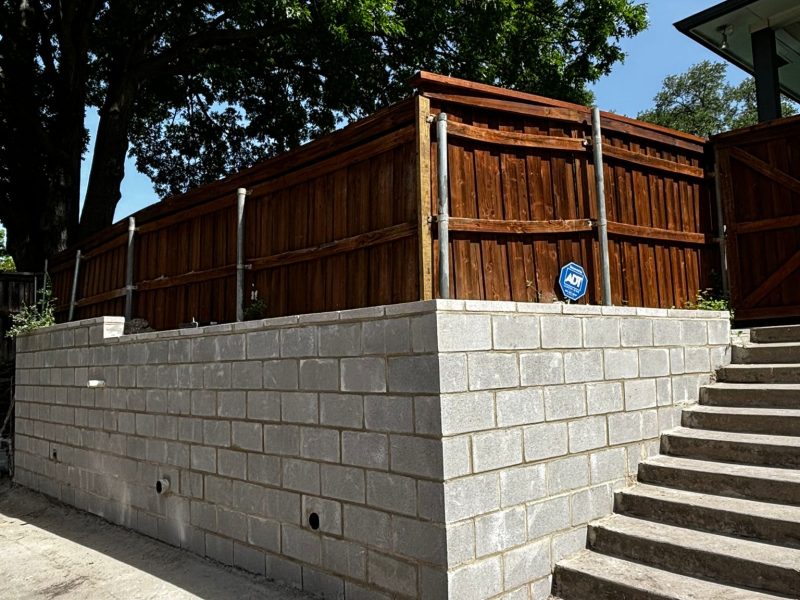
In the 2026 North Texas structural engineering sector, the degradation of earth retention systems is a significant concern for property owners due to the region’s high-plasticity clay and volatile moisture cycles. When a barrier begins to exhibit physical signs of distress, such as structural leaning or deep fracturing, the mechanical equilibrium of the entire landscape is compromised. A leaning wall is technically failing because its center of gravity has shifted beyond its footprint, while cracks indicate that the internal tensile or compressive forces have exceeded the material’s elastic limit. In Arlington, these failures are often exacerbated by the hydrostatic pressure generated during intense rain events. At Modern Build Solutions, we utilize advanced diagnostic tools to identify the root cause of these failures and implement precision-engineered stabilization protocols. This guide provides a technical analysis of the most effective repair solutions for restoring the load-bearing integrity of your Arlington property.
Helical Tie-Back Systems and Lateral Load Stabilization
For retaining walls that have begun to lean or rotate, the most technically sound solution is the installation of helical tie-back anchors. This process involves drilling high-strength steel shafts with helical plates deep into the stable soil behind the wall’s failure plane. Once the anchors reach a specific torque rating, which indicates they are seated in load-bearing earth, they are attached to the wall face with a heavy-duty steel plate. Technically, these anchors create a tension-based resistance that pulls the wall back toward the hillside and prevents further outward movement. This is a superior method to traditional replacement because it reinforces the existing structure without requiring total excavation of the building envelope.
- Torque-to-Capacity Calibration: We monitor the hydraulic pressure during installation to ensure each anchor meets the precise kips of resistance required by the 2026 structural engineering plan.
- Corrosion-Resistant Galvanization: All helical hardware used in our structural remediation services is hot-dipped galvanized to prevent oxidation in Arlington’s acidic clay environments.
- Angle of Incidence Optimization: Our engineers calculate the exact entry angle for the tie-backs to ensure they bypass the active pressure zone and engage with the undisturbed subgrade.
Pro-Tip: If your wall is leaning more than 1 inch for every foot of height, it has technically surpassed its rotational limit. In this scenario, simply adding more soil at the base (toeing-in) will not provide enough resistance. Helical tie-backs are the only technical solution that can permanently arrest the rotation and potentially pull the wall back to its original vertical alignment. For an immediate assessment, visit our regional Arlington service portal.
Polyurethane Chemical Grouting for Void Stabilization and Fissure Sealing
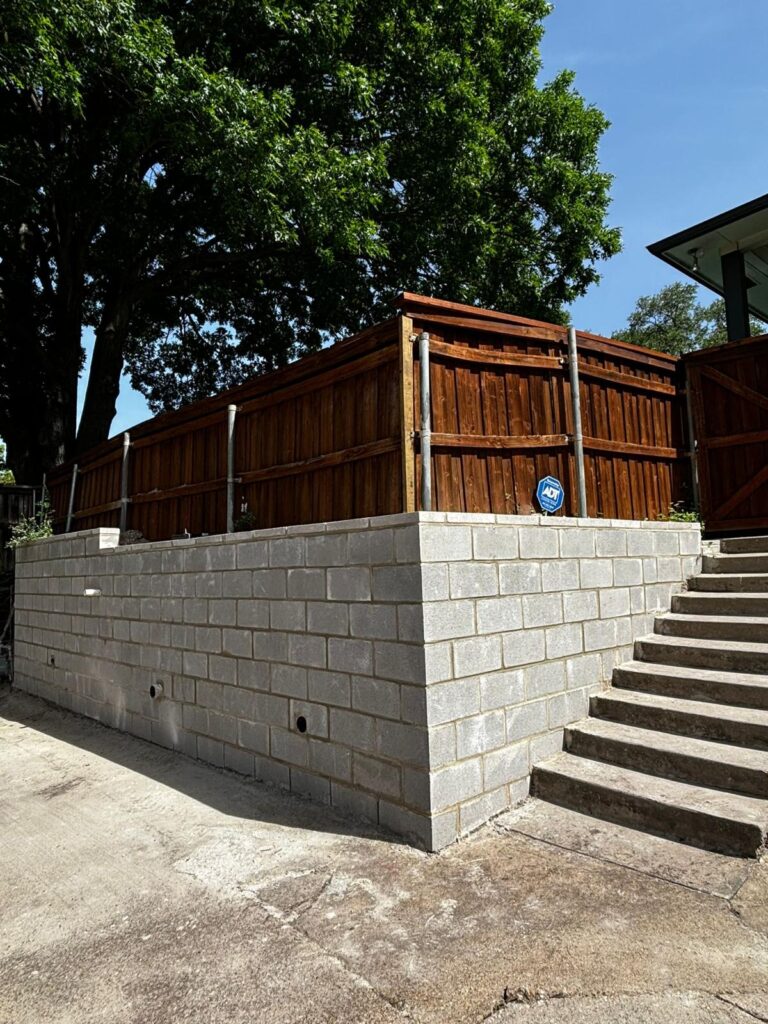
Cracks in retaining walls often indicate that the soil behind the structure has eroded or settled, creating subterranean voids. Technically, these voids allow water to pool, which increases hydrostatic pressure and accelerates material degradation. One of the best 2026 repair solutions is the injection of high-density, closed-cell polyurethane grout. This material is injected as a liquid through small ports in the wall face; it then expands into a rigid, lightweight foam that fills the voids and compacts the surrounding soil. This process not only seals the cracks from the inside out but also stabilizes the foundation of the wall by increasing the load-bearing capacity of the subgrade.
- Expansion Force Regulation: We utilize a specific grade of resin that provides enough expansion force to stabilize the soil without applying excessive pressure that could further damage a fragile masonry wall.
- Hydrophobic Barrier Formation: The polyurethane foam is technically hydrophobic, meaning it repels water and prevents future moisture-driven erosion behind the wall.
- Structural Bond Strength: The resin bonds with the internal surfaces of the cracks, restoring a degree of monolithic integrity to the concrete or stone structure.
Pro-Tip: Never use standard mortar to “patch” a structural crack in a retaining wall. Technically, mortar has no tensile strength and will simply crack again when the wall shifts. Polyurethane injection is superior because it remains slightly flexible, allowing it to move with the natural cycles of Arlington’s clay soil while maintaining a watertight seal. You can learn more about our advanced chemical stabilization techniques.
Retrofitted Hydrostatic Relief and Drainage Restoration
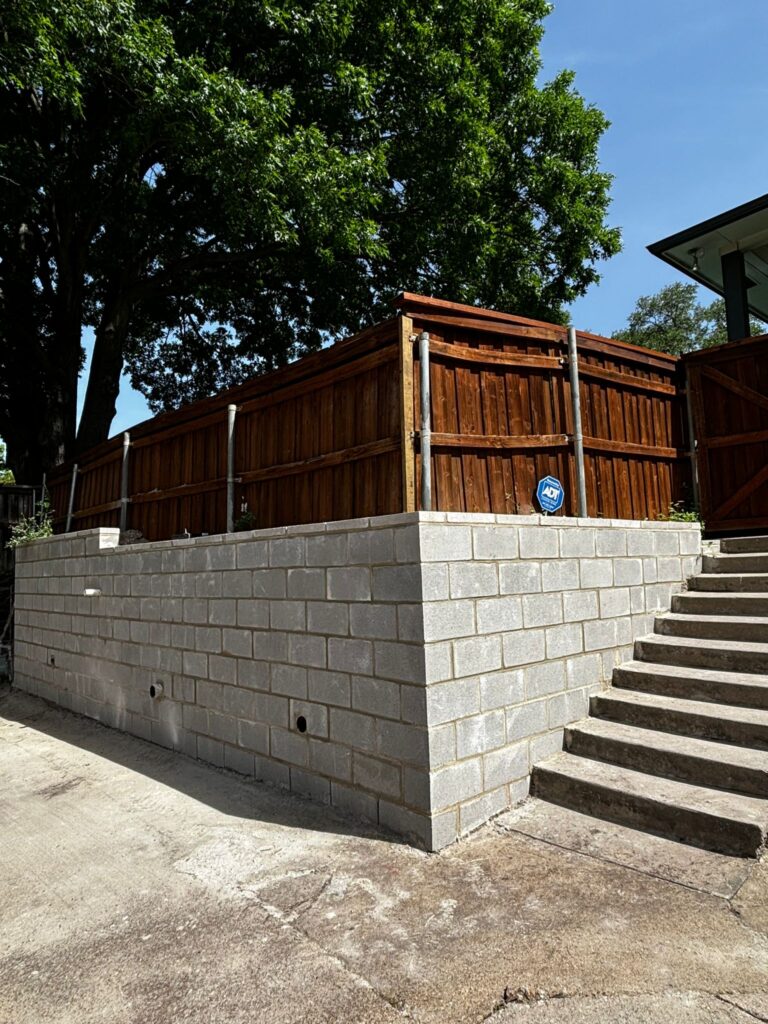
The primary technical cause of leaning and cracking in Arlington retaining walls is the failure of the internal drainage system. When water cannot escape, the weight of the saturated soil increases by approximately 62.4 pounds per cubic foot. To repair this, we implement retrofitted drainage solutions, such as the installation of high-output weep holes and the use of directional “hydro-drilling” to clear blocked pipes. In more severe cases, we may excavate a narrow trench behind the wall to install a modern drainage composite and a new perforated collector pipe. This relieves the hydraulic load, allowing the wall to function within its original engineered parameters and preventing the pressure that leads to mid-wall bowing.
- Hydraulic Flow Rate Calculation: We ensure that the number and diameter of new weep holes are technically sufficient to manage a 100-year storm event in the North Texas region.
- Directional Bore Cleaning: Our technicians use high-pressure water jets to clear silt and clay from existing pipes without needing to dismantle the wall structure.
- Aggregate Filtration Standards: When replacing backfill, we use angular crushed stone and non-woven filter fabric to ensure the new drainage system remains free of clogs for decades.
Pro-Tip: Check the area at the base of your wall for “efflorescence,” which is a white, powdery salt deposit. This is a technical indicator that water is being forced through the material because the internal drains have failed. Addressing this via specialized drainage restoration can stop the cycle of saturation that leads to leaning and structural cracks.
Structural Wall Capping and Parapet Reinforcement
In many cases, the top of the retaining wall is where cracking first manifests due to exposure to the elements and mechanical vibration from above. A technical solution involves the installation of a reinforced concrete or masonry cap that ties the top courses of the wall together. This cap acts as a structural “beam” that distributes lateral loads more evenly across the vertical plane. In 2026, we often integrate a slight overhang and a drip-edge on these caps to prevent rainwater from running down the face of the wall, which technically reduces the risk of surface spalling and rebar corrosion. This repair also provides a finished, aesthetic look that enhances the home’s curb appeal.
Conclusion
Resolving cracked and leaning retaining walls in Arlington requires a specialized understanding of soil physics and material science. Whether through the installation of helical tie-backs, the injection of polyurethane grout, or the restoration of critical drainage paths, the goal is to reinstate the structural equilibrium that has been lost. In 2026, homeowners must look beyond aesthetic patches and invest in engineering-grade solutions that address the root causes of failure. At Modern Build Solutions, we are dedicated to providing the technical oversight and high-performance repairs needed to stabilize your landscape and protect your home’s building envelope. By acting early to address these warning signs, you can avoid the much higher costs of a total structural collapse.
Transforming your home’s exterior stability begins with professional expertise. To learn more about the latest building standards and structural innovations in North Texas, you can access our library of technical construction insights for local inspiration. If your residence is ready for a professional and highly technical structural assessment, securing expert consultation and a formal project estimate is the most effective way to ensure a high-performance experience. You can review our history of excellence and client testimonials to see how we have served homes across the Arlington region for years. At Modern Build Solutions, we offer specialized structural renovation packages and are recognized as a leading provider of remediation for failing structures in Arlington designed to meet the unique mechanical needs of Texas properties.
FAQ
Can a leaning retaining wall be pulled back?
Yes. Technically, helical tie-back anchors can be used to apply tension and pull a wall back toward its original position, provided the wall’s material has not suffered catastrophic internal failure.
How much does it cost to fix a leaning wall in Arlington?
Stabilization with helical anchors typically costs between $1,500 and $3,000 per anchor, which is significantly cheaper than the $15,000+ cost of a full retaining wall installation in Arlington.
Why does my wall have horizontal cracks?
Horizontal cracks are a technical sign of mid-span bowing, which indicates that the soil pressure is exceeding the wall’s structural capacity or the internal reinforcement has failed.
Is polyurethane grout better than cement for filling cracks?
Yes. Polyurethane is technically superior because it expands to fill hidden voids, repels water, and provides a lightweight yet rigid support system that does not add excessive weight to the wall.
What happens if I ignore a leaning retaining wall?
Technically, the center of gravity will continue to shift outward until the wall reaches its “point of overturning,” leading to a sudden and catastrophic collapse.
Does your company provide emergency structural stabilization?
Yes. We offer rapid response structural repairs for walls that are in immediate danger of falling or causing property damage.
How do I know if my drainage is failed?
If you see water pooling at the top of the wall or seeping through the wall face rather than exiting via the weep holes, your drainage system is technically compromised.
Can tree roots cause a retaining wall to lean?
Yes. Technically, roots can apply immense localized pressure and can also disrupt the drainage pipes, leading to a build-up of hydrostatic pressure.
Is it worth repairing an old timber retaining wall?
In most cases, no. Timber has a limited technical lifespan. If a timber wall is leaning or rotting, we usually recommend a modern concrete replacement for long-term stability.
Does a repaired wall come with a warranty?
At Modern Build Solutions, we provide technical guarantees on our structural repairs, ensuring the stability of our work according to the 2026 building codes.