Many homeowners in the North Texas area face the challenge of a backyard that is essentially unusable due to a dramatic slope. This case study focuses on a recent project in a mature Arlington neighborhood where the backyard dropped nearly fifteen feet from the back door to the property line. The original space was a mud pit after every rain and was impossible to navigate for children or pets. As we moved into the design phase in early 2026, the goal was clear. We needed to transform this steep incline into a series of functional and high-performance living spaces. This required a deep understanding of local soil mechanics and a strategic approach to tiered retaining walls. By utilizing modern engineering and high-end materials, we were able to create a multi-level patio system that provides space for dining, lounging, and gardening. This post outlines the technical journey from a hazardous slope to a sophisticated outdoor retreat.
Phase One: Soil Analysis and Site Engineering
Before the first block was laid, we conducted a thorough analysis of the site topography and soil composition. Arlington is known for expansive clay that creates massive pressure on structural walls. Our engineering team determined that a single massive wall would be too visually imposing and technically risky. Instead, we designed a three-tier system to break up the grade. Each level was engineered with a specific setback to ensure the weight of the upper tiers did not overload the lower foundations. In 2026, municipal codes for steep slopes are very strict, so we submitted detailed structural plans that included internal reinforcement and soil anchoring. This initial phase is the most critical part of the process. It ensures that the final product is not only beautiful but also permanently stable in the face of North Texas soil movement. Proper planning at this stage prevents settling and leaning in the decades to come.
- Grade Calculation: We utilized laser leveling technology to map the fifteen-foot drop and determine the exact height for each of the three tiers.
- Pressure Management: By using a tiered approach, we distributed the lateral earth pressure across three separate foundations instead of one.
- Regulatory Compliance: Our team secured all necessary Arlington permits by providing engineered drawings that exceeded local 2026 safety standards.
The Foundation: Base Preparation and Compaction
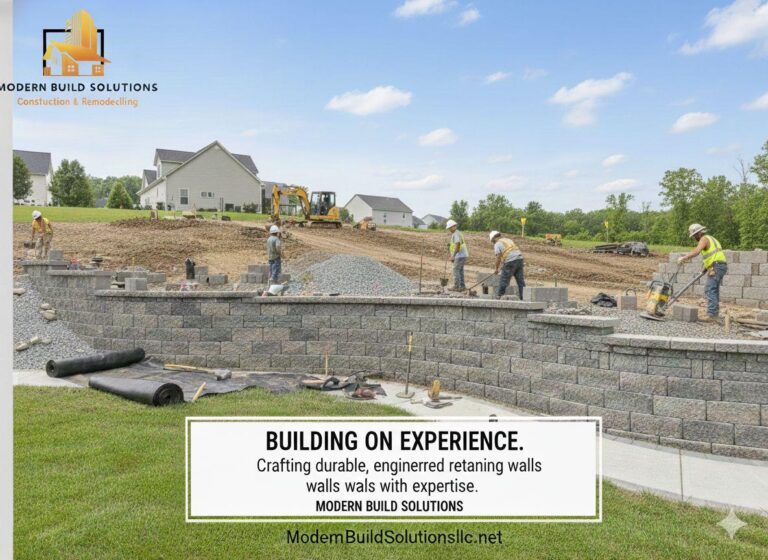
The success of any multi-level patio rests on the quality of its foundation. For this Arlington project, we excavated deep trenches for each tier, removing the unstable surface clay and replacing it with a six-inch layer of crushed limestone road base. We used heavy-duty vibratory plate compactors to ensure the base reached ninety-five percent density. This creates a solid and non-shifting platform for the segmental blocks. We buried the first course of each wall to provide lateral resistance against the soil pushing from behind. In 2026, we also began using geogrid reinforcement on every tier. This high-strength mesh is sandwiched between the blocks and extends back into the hillside, effectively tying the wall into the earth. This technical layout secret is what allows us to build on steep slopes with absolute confidence. A stable base is the only way to ensure the patio surfaces remain perfectly level over time.
Managing Water: The Tiered Drainage System
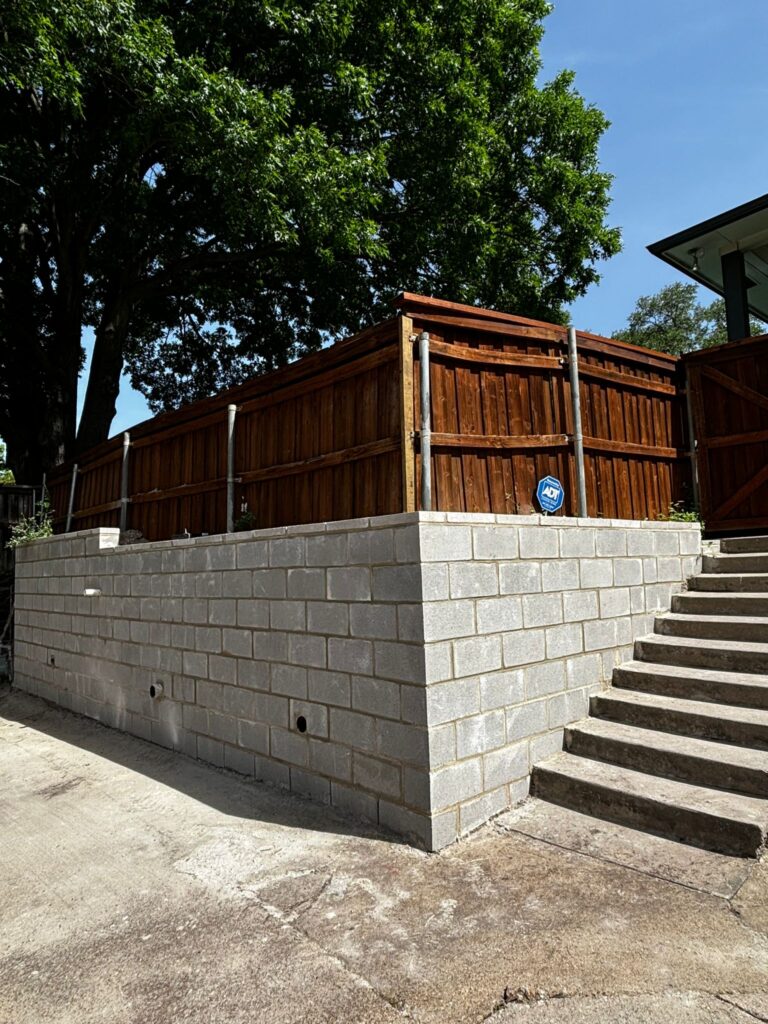
A steep backyard is essentially a funnel for rainwater, and managing that flow was our top priority. We installed a redundant drainage system that included four-inch perforated PVC pipes behind every single tier. These pipes were encased in a vertical chimney of clean crushed stone to ensure water could quickly reach the drains. To prevent the clay from clogging the stone, we wrapped the entire drainage column in professional-grade geotextile fabric. We also integrated surface catch basins on each patio level to capture runoff from the pavers. These lines were all tied into a solid collector pipe that directed the water to a high-capacity pop-up emitter near the street. This layout secret ensures that the backyard stays dry and that the neighbor’s property is protected from flooding. In the 2026 Arlington climate, where flash floods are common, this level of drainage engineering is a non-negotiable standard for our builds.
Material Selection: Aesthetics and Performance
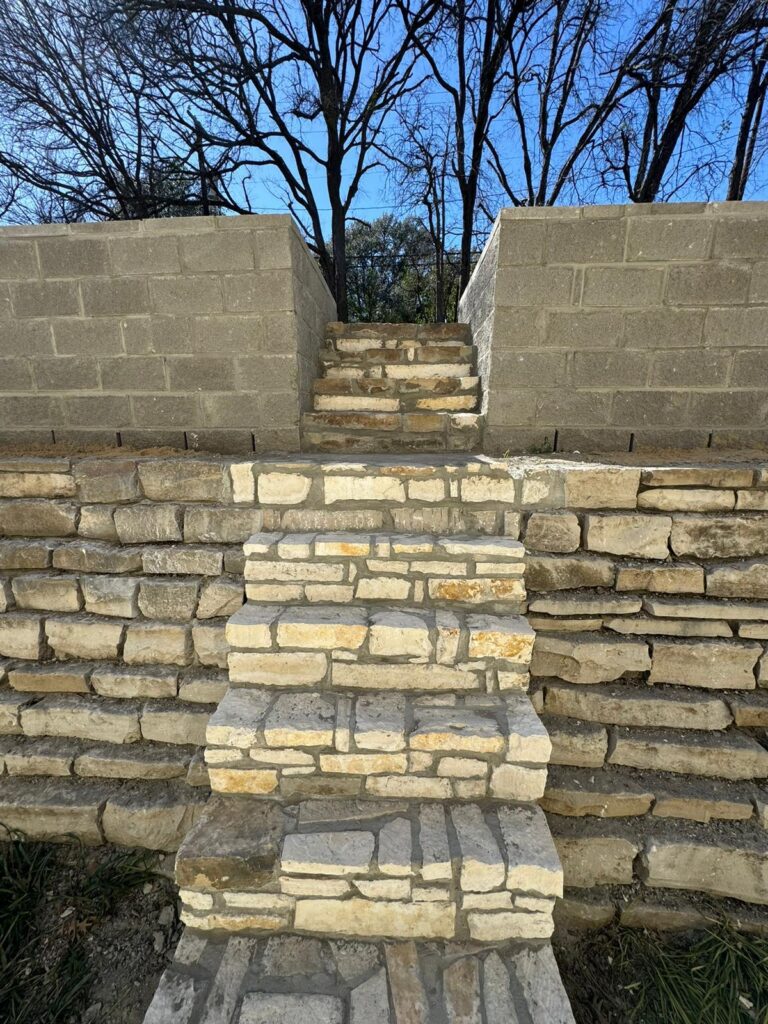
For the patio surfaces and wall faces, we selected materials that balance the earthy 2026 aesthetic with industrial durability. We chose large-format porcelain pavers for the dining and lounging areas because they are non-porous and resistant to the harsh Texas sun. These were paired with segmental wall blocks that mimic the texture of natural hand-hewn stone. The color palette featured warm tans and charcoal grays to complement the existing architecture of the Arlington home. By using different textures for each level, we created visual interest and defined the separate “rooms” of the outdoor space. The upper level serves as the main dining area, while the middle tier features a built-in fire pit and seating. The lowest level was designed as a transition zone with low-maintenance native plantings. This intentional selection of materials ensures that the backyard feels like a cohesive and high-end extension of the home interior.
- Porcelain Pavers: These provide a slip-resistant surface that stays cooler than concrete and is virtually impossible to stain with grease or mud.
- Modular Blocks: Using pre-engineered blocks allowed for a faster installation and provided the mechanical interlocking needed for the tiered design.
- Organic Contrast: We integrated wooden elements and native Texas plants to soften the look of the stone and create a welcoming atmosphere.
Lighting and Sensory Integration
A high-end multi-level patio is only as good as its nighttime functionality. We integrated a layered LED lighting system into the walls and steps of this Arlington project. We used under-cap lights to highlight the texture of the stone and provide a soft ambient glow across the patio surfaces. Motion-activated toe kick lights were installed on the stairs to ensure safe navigation between the tiers after dark. In 2026, we also began integrating outdoor soundscapes, hiding weather-resistant speakers within the landscape beds. This sensory approach transforms the backyard into a true retreat. The lighting not only enhances the safety of the steep site but also emphasizes the architectural depth of the tiered design. By focusing on how the space feels at night, we were able to double the usable hours of the backyard for the homeowners.
Final Results and ROI for the Homeowner
The transformation was dramatic. What was once a steep and unusable slope is now a three-level sanctuary that adds significant living square footage to the property. The homeowners now have a dedicated space for hosting large gatherings and a private nook for quiet evenings. From a financial perspective, this project provided a massive boost to the home resale value. In the 2026 Arlington market, a functional and professionally engineered backyard is a top priority for buyers. By solving the erosion and drainage issues while adding high-end luxury features, we created a project that pays for itself in both equity and quality of life. This case study proves that with the right technical approach and design vision, even the most challenging Arlington lot can be turned into a world-class outdoor living environment. The success of this project lies in the harmony between structural engineering and aesthetic design.
Conclusion
Transforming a steep Arlington backyard into a multi-level patio is a complex undertaking that requires a perfect blend of engineering and artistry. By addressing the core challenges of soil movement and drainage, and structural setbacks, we were able to deliver a project that exceeds all 2026 standards. A tiered system is more than just a way to hold back dirt. It is a way to reclaim your land and create a lifestyle that was previously impossible. At Modern Build Solutions, we take pride in solving these difficult landscape puzzles for our neighbors in North Texas. This case study serves as a blueprint for what is possible when you prioritize high-performance materials and technical precision. If your backyard is currently a wasted space due to a slope, remember that every hill is just an opportunity for a beautiful and functional retreat. Your home deserves a backyard that is as impressive as its interior.
Transforming your home is a journey that begins with a clear vision and professional expertise. To learn more about the latest construction standards and design innovations in the North Texas area, you can explore our comprehensive remodeling blog and design guides for local inspiration. If your current bathroom is suffering from outdated plumbing or you are ready to start a high-end zero-entry transformation, securing expert consultation and accurate project estimation is the most effective way to ensure a seamless experience. You can view our history of craftsmanship and client success to see how we have revitalized homes across Arlington. At Modern Build Solutions, we offer tailored renovation and master suite services designed to meet the unique structural needs of mid century properties. We are dedicated to helping you create a space that balances modern luxury with the classic character of your Arlington residence.
FAQ
How much does a multi-level tiered patio cost in Arlington?
For a high-end project involving three tiers and drainage in 2026, budgets typically range from forty thousand to eighty thousand dollars, depending on the square footage.
Is a permit required for tiered patios and walls?
Yes. Any wall system over four feet in total height or those involving structural changes to a slope require a permit from the City of Arlington.
How long does it take to transform a steep backyard?
A project of this scale usually takes between four and six weeks from initial excavation to the final finishing touches and landscaping.
Can porcelain pavers handle the Texas heat?
Yes. Porcelain is denser than concrete and does not absorb as much heat, making it more comfortable for bare feet in the North Texas summer.
What is the best way to handle water runoff on a slope?
A combination of French drains behind the walls and surface catch basins is the most effective way to manage water and protect your home.
Will tiered walls help stop soil erosion?
Absolutely. By breaking up the slope into flat sections, you significantly reduce the velocity of rainwater and keep your soil in place.
Do I need an engineer for a tiered wall system?
In Arlington, any wall system over four feet tall requires an engineered plan to ensure the safety and longevity of the structure.
What maintenance is required for segmental block walls?
Very little. You should check the drainage outlets annually and power wash the pavers occasionally, but the blocks themselves are maintenance-free.
Can I add a fire pit to a tiered patio?
Yes. The middle or lower tiers are excellent locations for built-in fire pits, providing a cozy focal point for the outdoor space.
How does a tiered patio affect home resale value?
In 2026, a professionally built outdoor living space can recoup up to seventy percent of its cost and significantly reduce the time a home stays on the market.