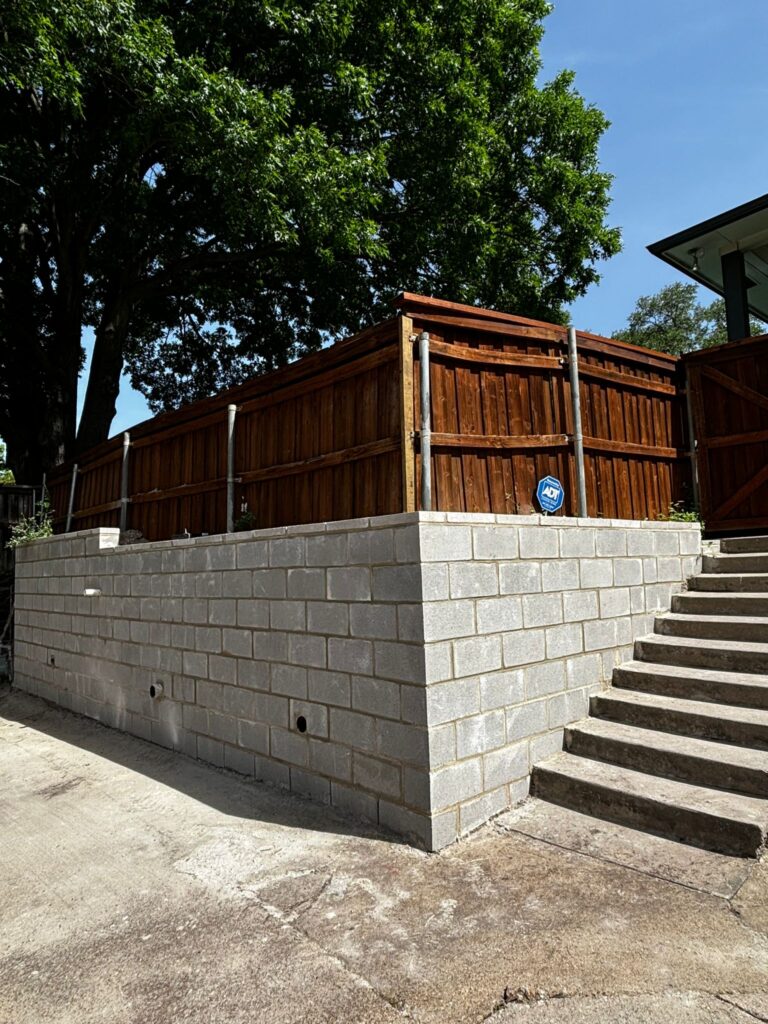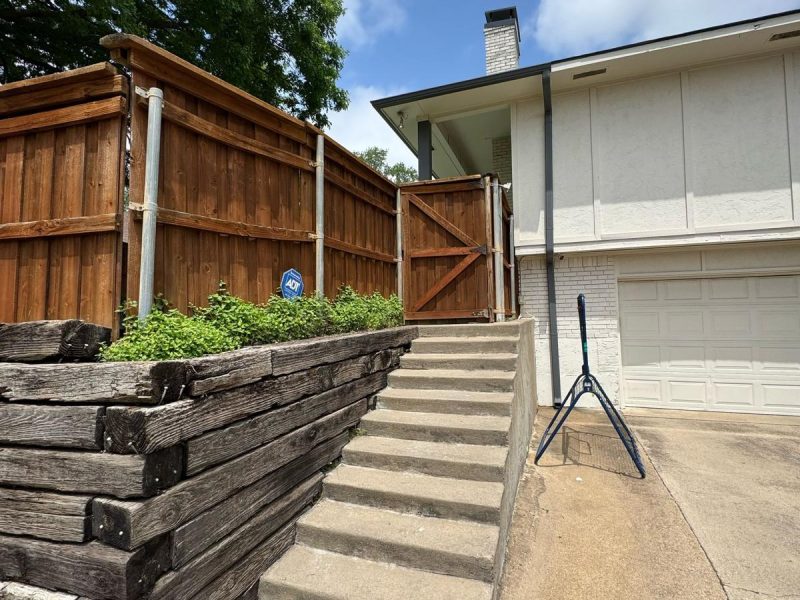
In the hilly terrain of Arlington, tiered retaining walls are a popular choice for managing steep slopes and creating usable backyard space. However, adding a multi-level wall system significantly alters how water moves across your property. As we navigate the 2026 building landscape, the City of Arlington has placed a high priority on responsible stormwater management. Texas law specifically follows a modified civil law rule, which states that property owners can be held liable if they divert surface water in a way that causes substantial harm or flooding to a neighbor. Building a tiered wall without a professional drainage strategy is a recipe for legal disputes and structural failure. At Modern Build Solutions, we focus on layout secrets that capture and redirect water before it ever reaches the property line. This blog post breaks down the technical steps to building beautiful and tiered walls that actually improve the drainage health of your entire neighborhood.
The Science of Tier Spacing and Pressure Relief
One of the most common mistakes in tiered wall design is placing the upper wall too close to the lower one. In 2026, the technical standard for structural stability is the two-to-one rule. This means that the horizontal distance between the two walls should be at least twice the height of the lower wall. If the lower wall is three feet tall, the upper wall must be set back at least six feet. If you place them closer, the weight of the upper wall creates a surcharge load on the lower wall, which can lead to bulging or a total collapse. This layout secret also provides a dedicated flat zone between the walls where we can install critical surface drainage. By spacing the tiers correctly, you distribute the weight of the soil more effectively and create natural catchments for rainwater. This ensures that each wall operates as an independent and stable structure rather than a single and overloaded system.
- Surcharge Management: Proper spacing prevents the upper tier from exerting a horizontal force that could blow out the lower wall face.
- Access for Maintenance: Wide tiers allow for easier lawn care and plant maintenance while providing a clear path for drainage inspections.
- Visual Balance: Tiers that are spaced according to the two-to-one rule look more proportional and integrated into the natural slope.
Hidden French Drains for Multi-Level Protection
For tiered walls, a single drain pipe is often not enough to handle the volume of water typical of a North Texas storm. In 2026, we utilize a tiered drainage approach where each level has its own independent French drain system. We install a four-inch perforated PVC pipe at the base of the lower wall and a secondary pipe at the base of the upper wall. Both pipes are surrounded by twelve inches of clean and angular crushed stone. These pipes are then tied into a solid collector line that carries the water to a safe discharge point, such as a storm sewer or a dry creek bed. This prevents the upper tier from saturating the soil behind the lower tier. By compartmentalizing the water collection, we ensure that neither wall is ever subjected to full hydrostatic pressure. This technical redundancy is what keeps your walls plumb and your neighbor’s yard dry even during the most intense spring rains.
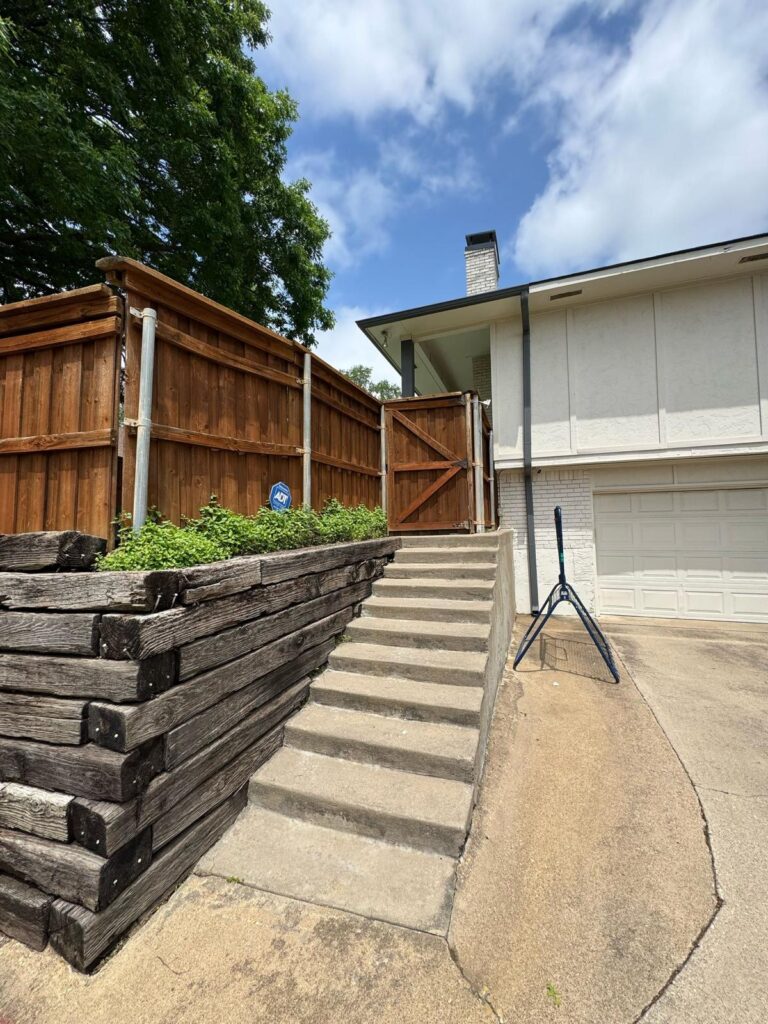
Surface Swales and The Neighbor Buffer Zone
While underground pipes handle the subsurface water, surface runoff must also be managed to prevent neighbor flooding. We often design a shallow swale or a grassy depression directly behind the top tier and between the levels. This swale acts as a natural gutter that intercepts surface water before it can spill over the wall face. To comply with the 2026 Arlington drainage codes, we ensure these swales are graded to a minimum one percent slope. This directs the water toward a catch basin rather than letting it cascade down the tiers. We also maintain a buffer zone at the property line where we use permeable materials or rain gardens to absorb any residual moisture. This proactive approach shows that you are taking reasonable care to manage your runoff, which is the best defense against potential civil liability under Texas property laws.
Choosing High-Capacity Aggregate for Clay Soil
Arlington clay soil is notorious for holding water like a sponge. When building tiered walls, the choice of backfill material is the most important technical decision you will make. In 2026, we have moved away from using native soil for backfill in favor of high-capacity crushed stone. We use three-quarter-inch washed stone because it provides a forty percent void space for water to move through. This aggregate is wrapped in a non-woven geotextile fabric to prevent the fine clay particles from clogging the drainage system over time. For tiered walls, this drainage column must extend from the base of the wall all the way to within six inches of the top of each tier. This ensures that water can fall vertically through the gravel and into the pipes instead of sitting in the soil. This technical detail is what prevents the walls from leaning and protects the lower levels from excessive moisture.
- Angular vs Rounded: We always use angular crushed stone because it interlocks for better stability while still allowing for maximum water flow.
- Clog Prevention: The geotextile burrito wrap is essential for keeping the North Texas clay from infiltrating and ruining your expensive gravel drainage.
- Vertical Integration: The gravel column must be continuous behind every tier to provide a clear path for water to reach the French drains.
Permitting and Engineered Drainage Plans
In Arlington, any tiered system where the total height of all walls combined exceeds four feet may require an engineered plan. In 2026, the city building officials look closely at how these multi-level systems affect the overall site drainage. We provide detailed cross sections that show the placement of pipes and the direction of the water flow. Getting a permit is not just a legal requirement. It is a protective measure for the homeowner. When your plans are approved by a city engineer, it provides a layer of professional validation for your project. This is especially helpful if a neighbor ever raises concerns about drainage changes. Our team handles the site survey and the engineering coordination to ensure that your tiered wall meets all municipal standards. This ensures that your investment is safe and that your relationship with your neighbors remains positive.
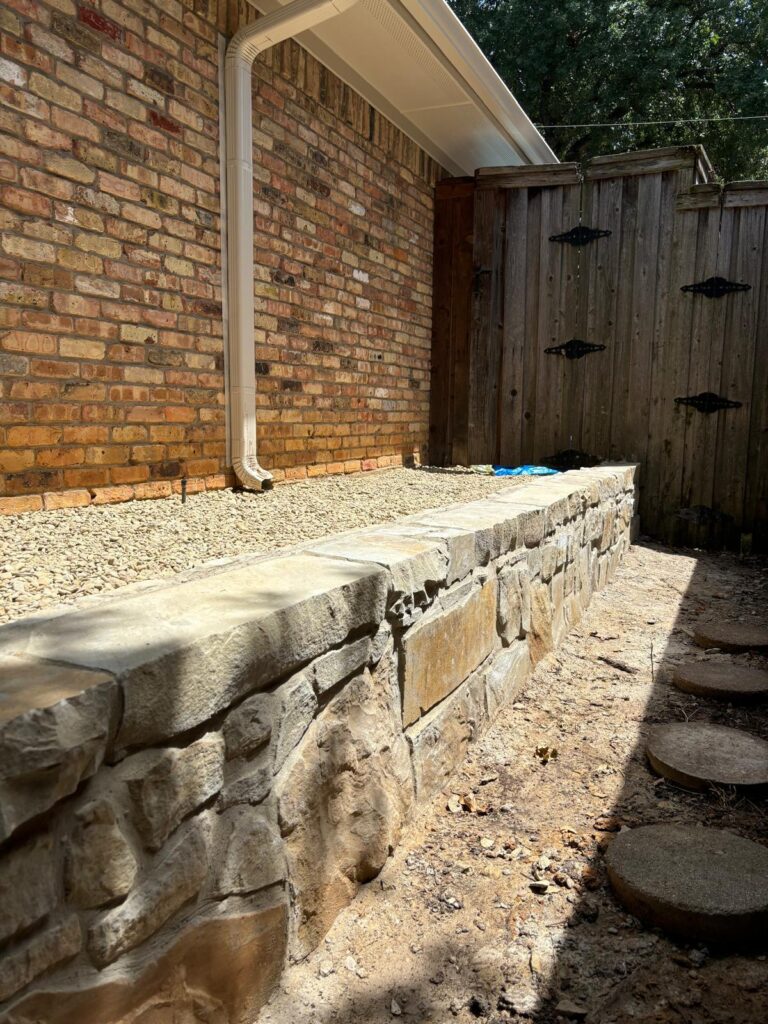
Discharge Solutions: Where the Water Goes
The final piece of the drainage puzzle is the discharge point. It is against the Arlington city code to unnaturally concentrate water and dump it directly onto a neighbor’s property or a public sidewalk. In 2026, we utilize pop-up emitters or catch basins that are located at least ten feet away from the property line. This allows the water to spread out naturally over a grassy area or enter a professional drainage system. If your lot is particularly challenging, we may install a dry well or a bioswale to hold and slowly release the water into the ground. This prevents a sudden surge of water from overwhelming the neighbor’s yard during a storm. By managing the final exit of the water with the same precision as the collection, we ensure that your tiered wall system is a benefit to the local environment rather than a nuisance.
Conclusion
Adding a tiered retaining wall to your Arlington property is an excellent way to enhance your landscape and increase your home value. However, the technical demands of managing water on a slope cannot be ignored. By following the two-to-one setback rule and installing redundant French drains and utilizing high-capacity aggregates, you can build a system that is both beautiful and responsible. As we look forward to the rest of 2026, the focus for Arlington homeowners should be on sustainable and neighbor-friendly design.
Transforming your home is a journey that begins with a clear vision and professional expertise. To learn more about the latest construction standards and design innovations in the North Texas area, you can explore our comprehensive remodeling blog and design guides for local inspiration. If your current bathroom is suffering from outdated plumbing or you are ready to start a high-end zero-entry transformation, securing expert consultation and accurate project estimation is the most effective way to ensure a seamless experience. You can view our history of craftsmanship and client success to see how we have revitalized homes across Arlington. At Modern Build Solutions, we offer tailored renovation and master suite services designed to meet the unique structural needs of mid century properties. We are dedicated to helping you create a space that balances modern luxury with the classic character of your Arlington residence.
FAQ
Does Arlington require a permit for tiered retaining walls?
Yes. If the total height of all tiers combined is over four feet or if they are close together, a permit and engineered plans are usually required in 2026.
How far apart should the tiers be spaced?
The industry standard is the two to one rule. The horizontal distance between walls should be at least twice the height of the lower wall.
Can I drain my retaining wall into the street?
Arlington code typically allows discharge into the curb and gutter under specific conditions, but water should never be dumped directly onto the sidewalk.
What happens if my wall causes my neighbor’s yard to flood?
Under Texas law, you could be held liable for damages if your project diverted surface water in an unreasonable way that caused substantial harm.
Do I need a French drain for every tier?
Yes. In the heavy clay soil of Arlington, we highly recommend independent drainage for each level to prevent the system from becoming overwhelmed.
What is the best backfill for tiered walls?
Clean wa, shed crushed stone is the best choice because it provides the most void space for water to move and does not settle like soil.
How do I stop water from spilling over the top of the wall?
We install a shallow swale or a catch basin on the uphill side of the wall to intercept surface water and carry it away through a pipe.
Are weep holes enough for a tiered system?
No. Weep holes are a good secondary measure, but a tiered system requires a full perforated pipe system to handle the volume of water behind the tiers.
How long do the drainage pipes in a wall last?
When wrapped in geotextile fabric and surrounded by gravel, a PVC drainage system can last fifty years or more without clogging.
Can a tiered wall help with foundation issues?
Yes. By stabilizing a slope and directing water away from the house, a well designed wall can prevent the soil movement that causes foundation cracks.